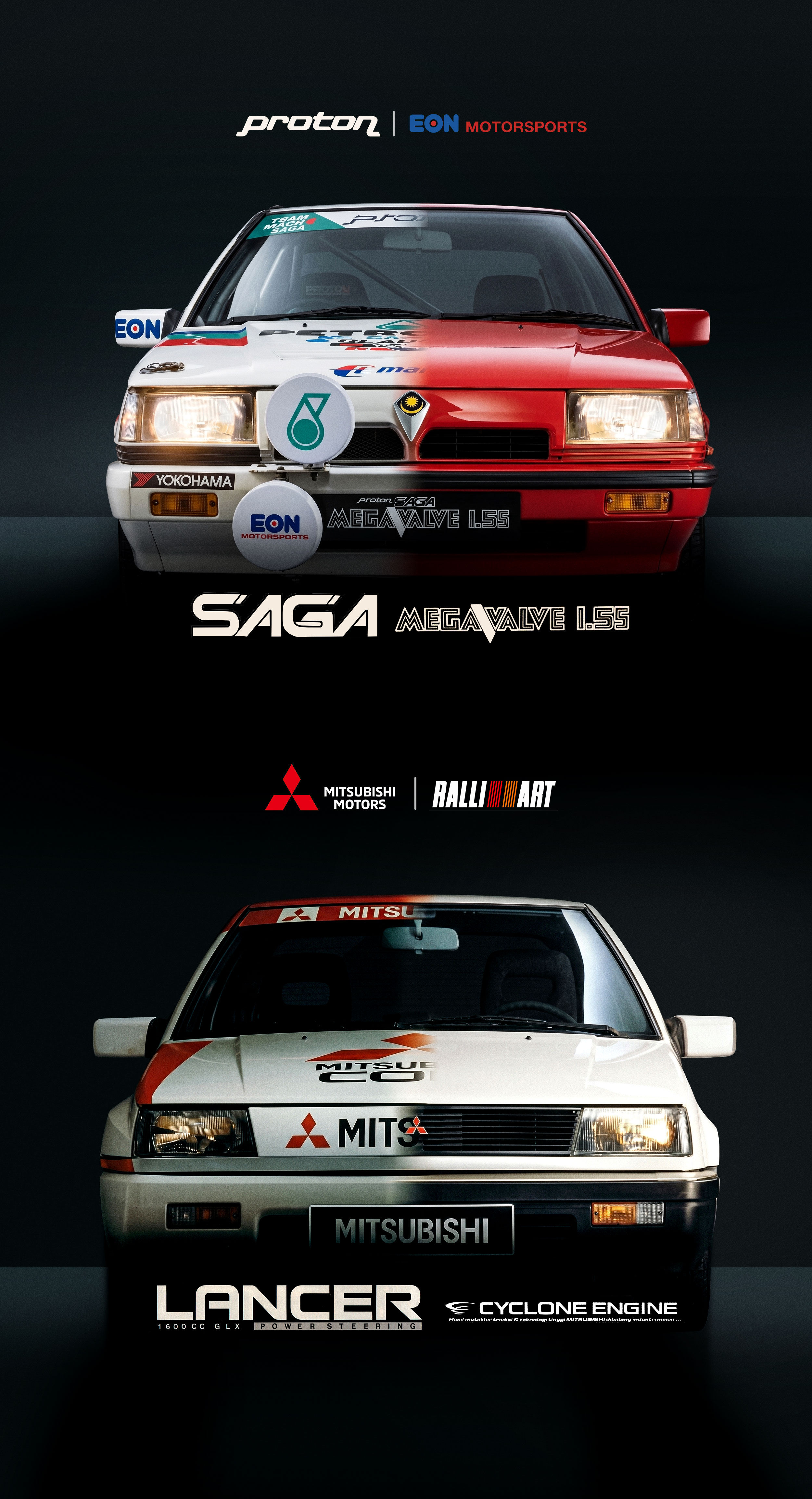
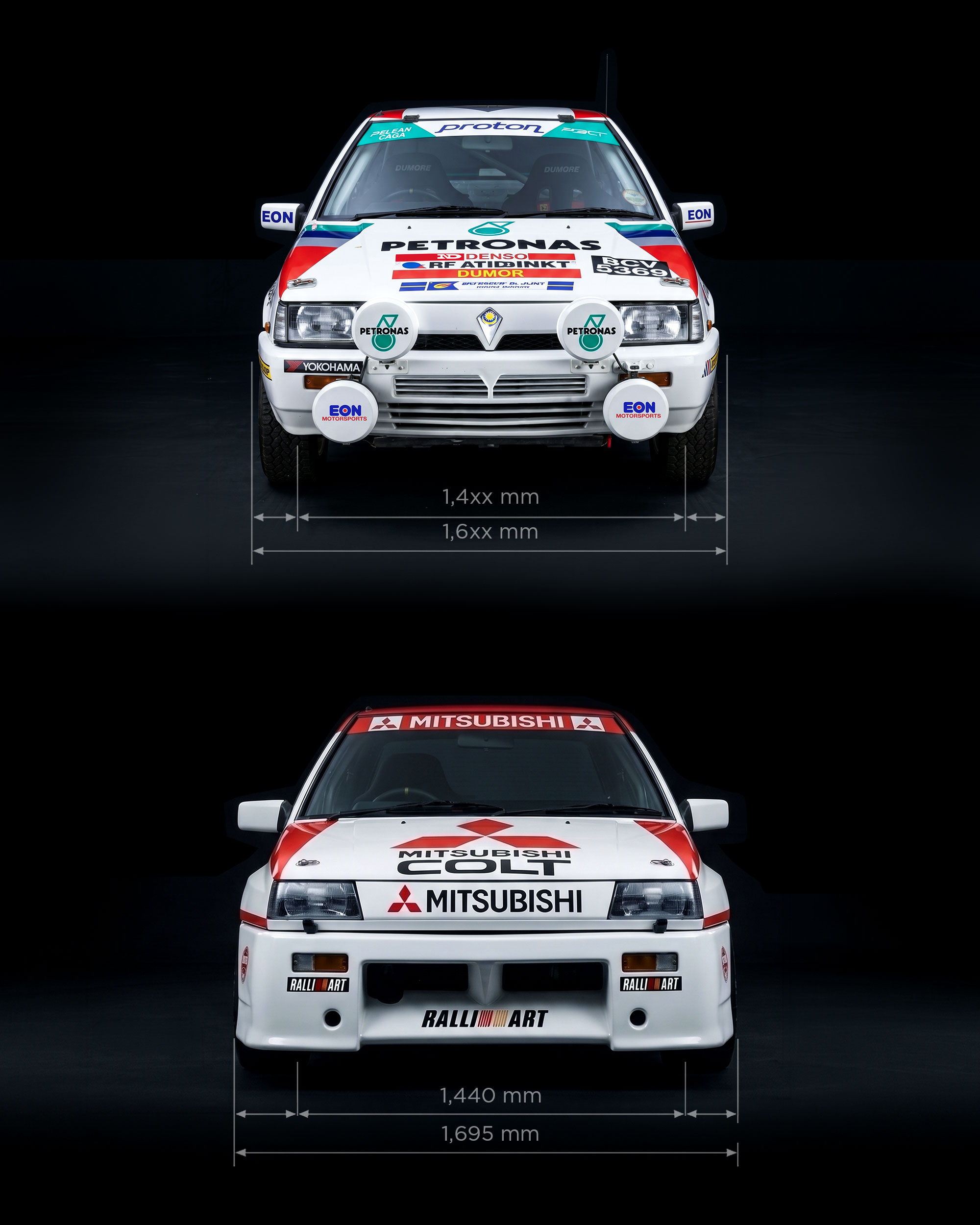
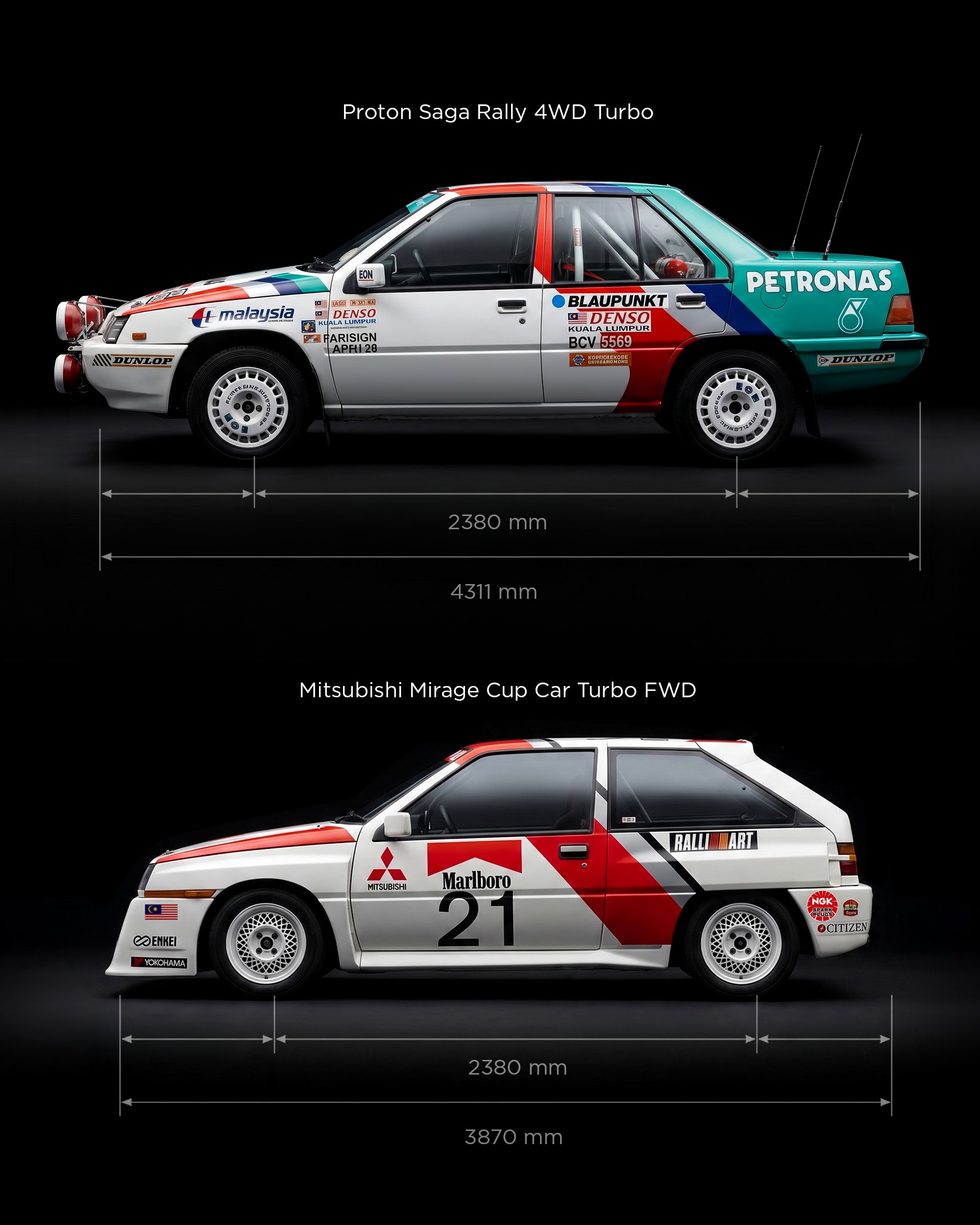
While they may look like humble 1980s family sedans to the untrained eye, the Mitsubishi Mirage and the Proton Saga are legendary siblings that redefined performance in two completely different arenas. Despite their different paths, both machines share a foundational 2,380 mm wheelbase, proving that a well-engineered platform can conquer both the glamour of the racetrack and the brutality of the rally stage.
Mitsubishi: The Celebrity Circuit Star
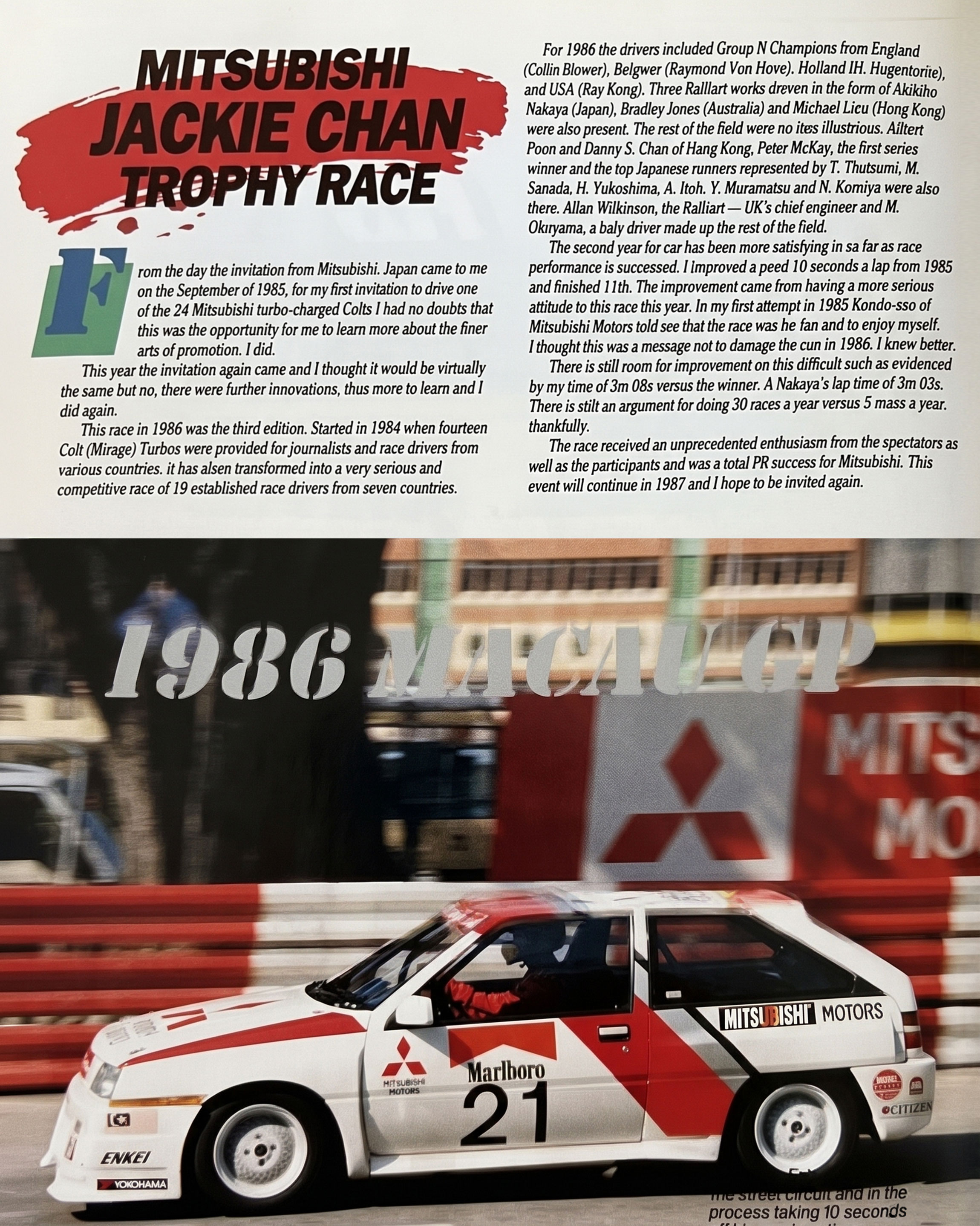
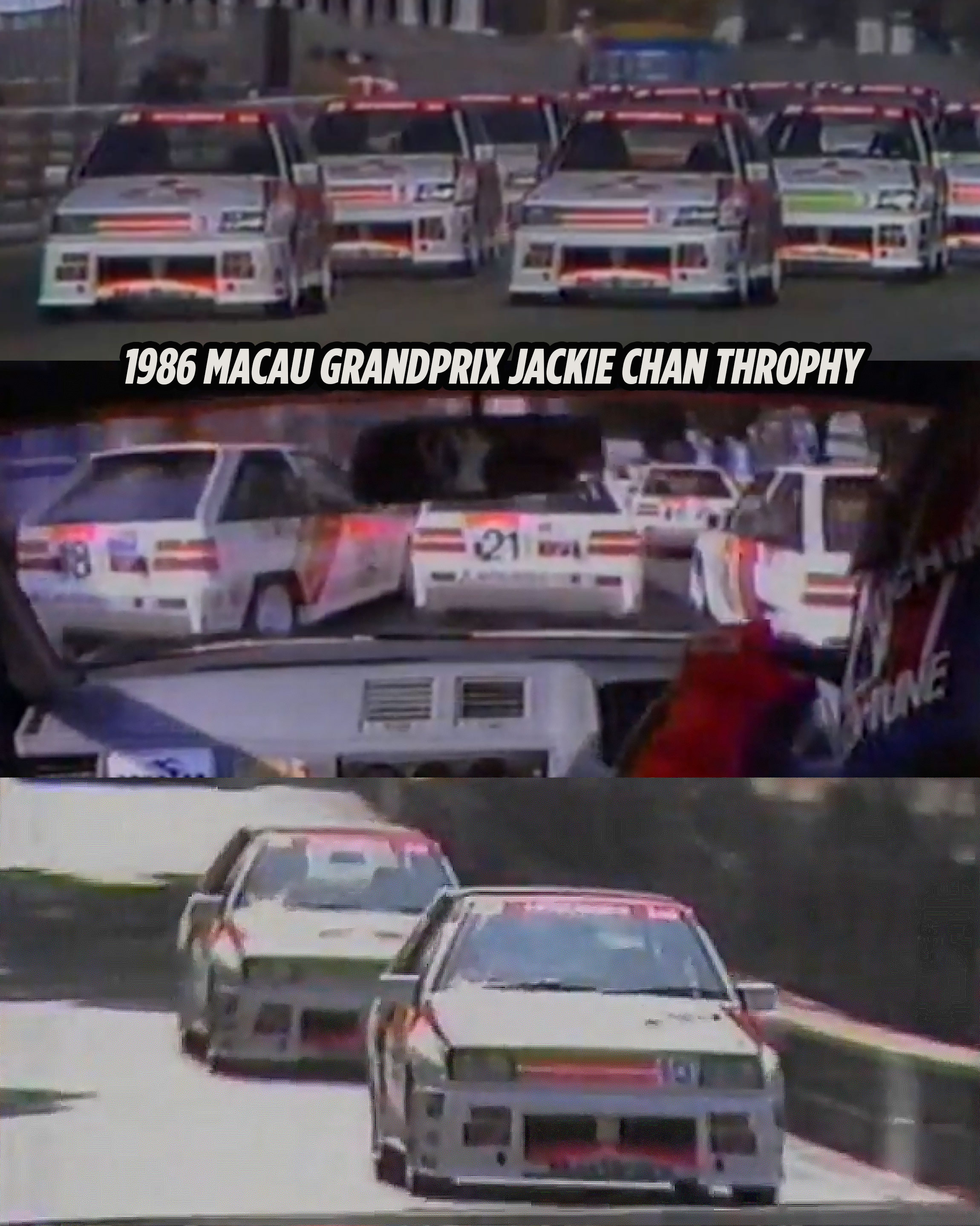
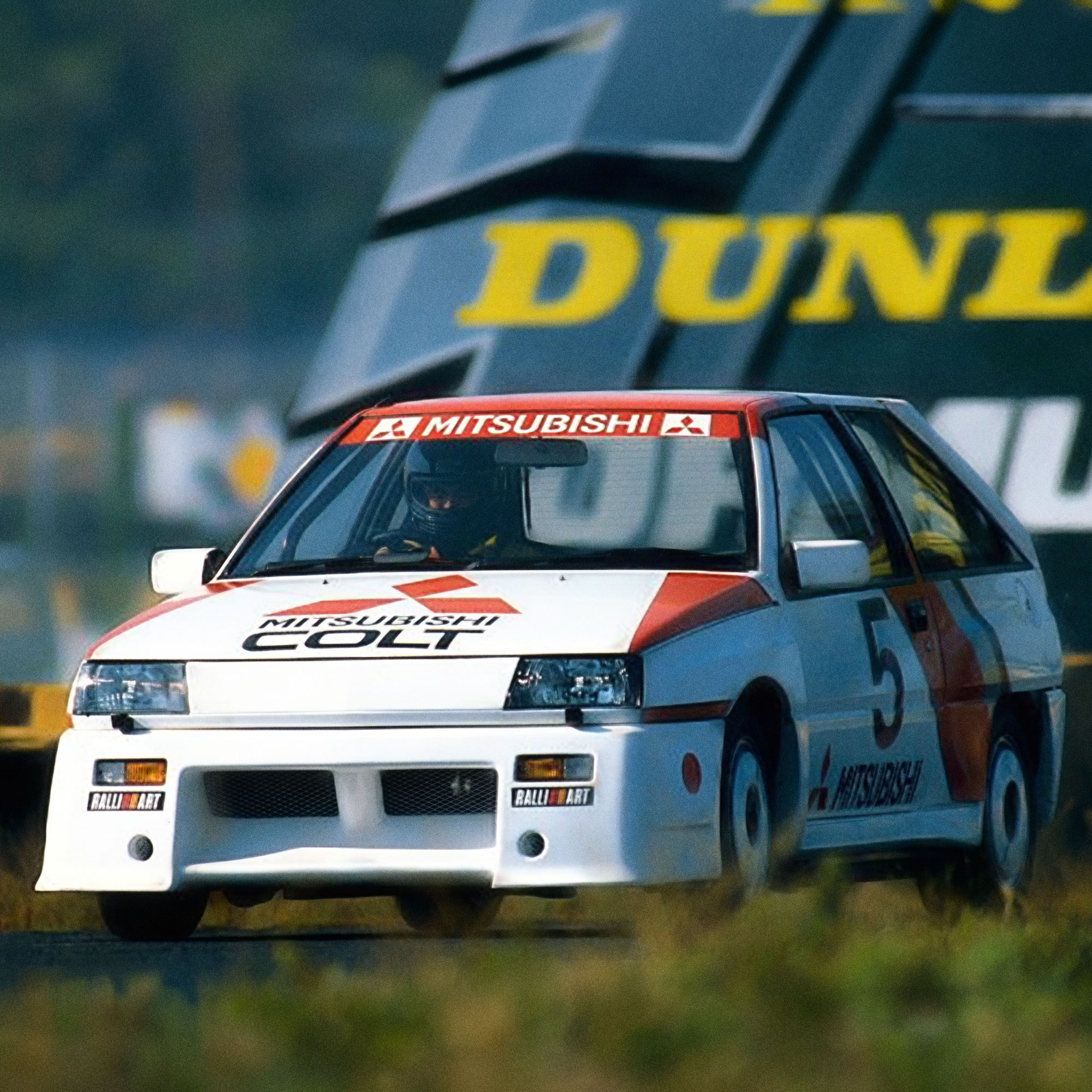
The Mitsubishi Mirage (often badged as the Colt in racing) was more than just a track specialist; it was a cultural icon popularized by the legendary Jackie Chan Cup starting in 1984. This celebrity-driven race series served as a high-profile testing ground for Mitsubishi’s front-wheel-drive (FWD) turbo technology.
Under the global spotlight of action cinema fans, the Mirage “Cup Car” versions proved that the chassis could handle high-speed competitive stress. While the production models were known for fuel efficiency, the racing variants showcased the true potential of the Mitsubishi/Ralliart partnership on the tarmac.
Proton: The Rally Powerhouse
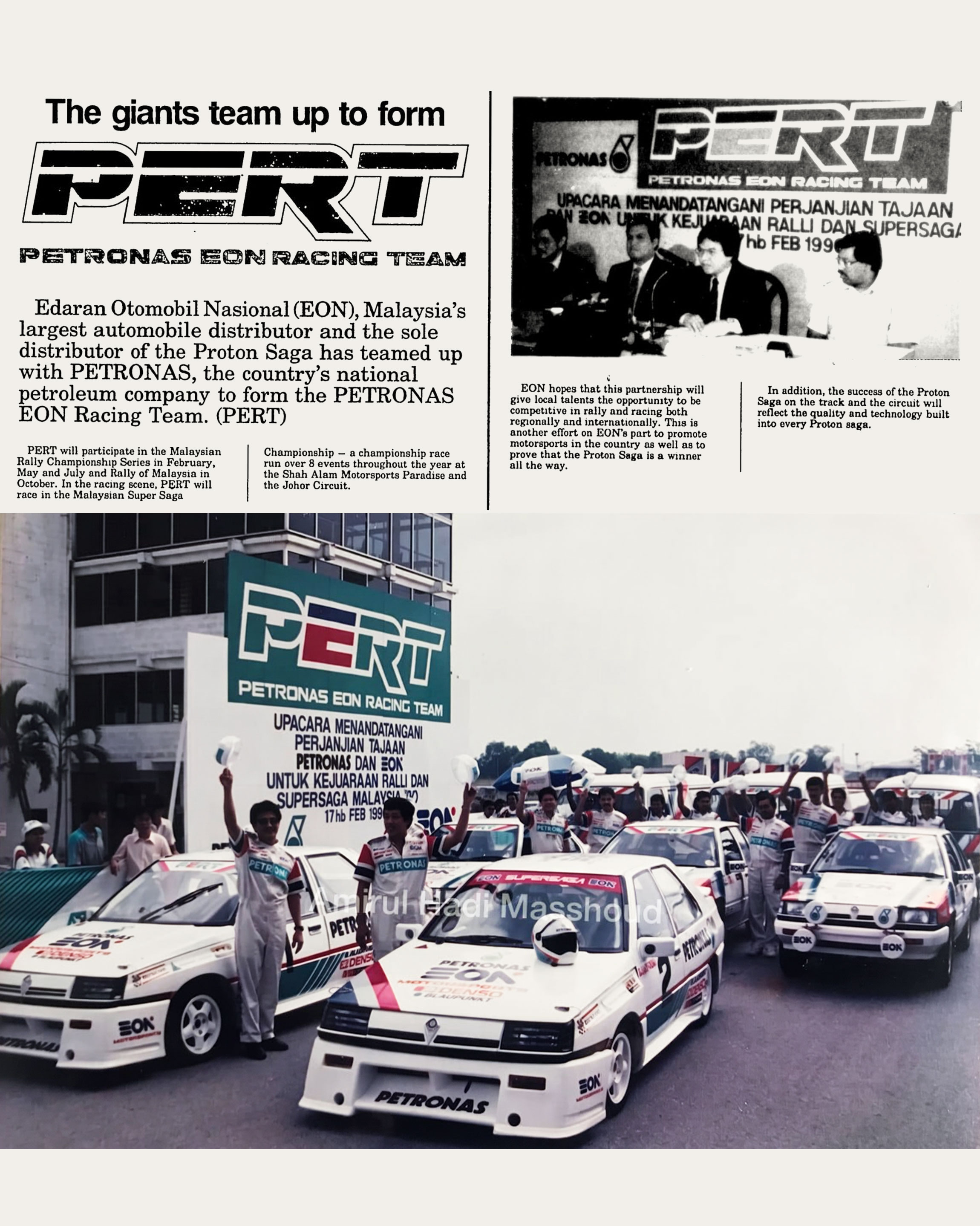
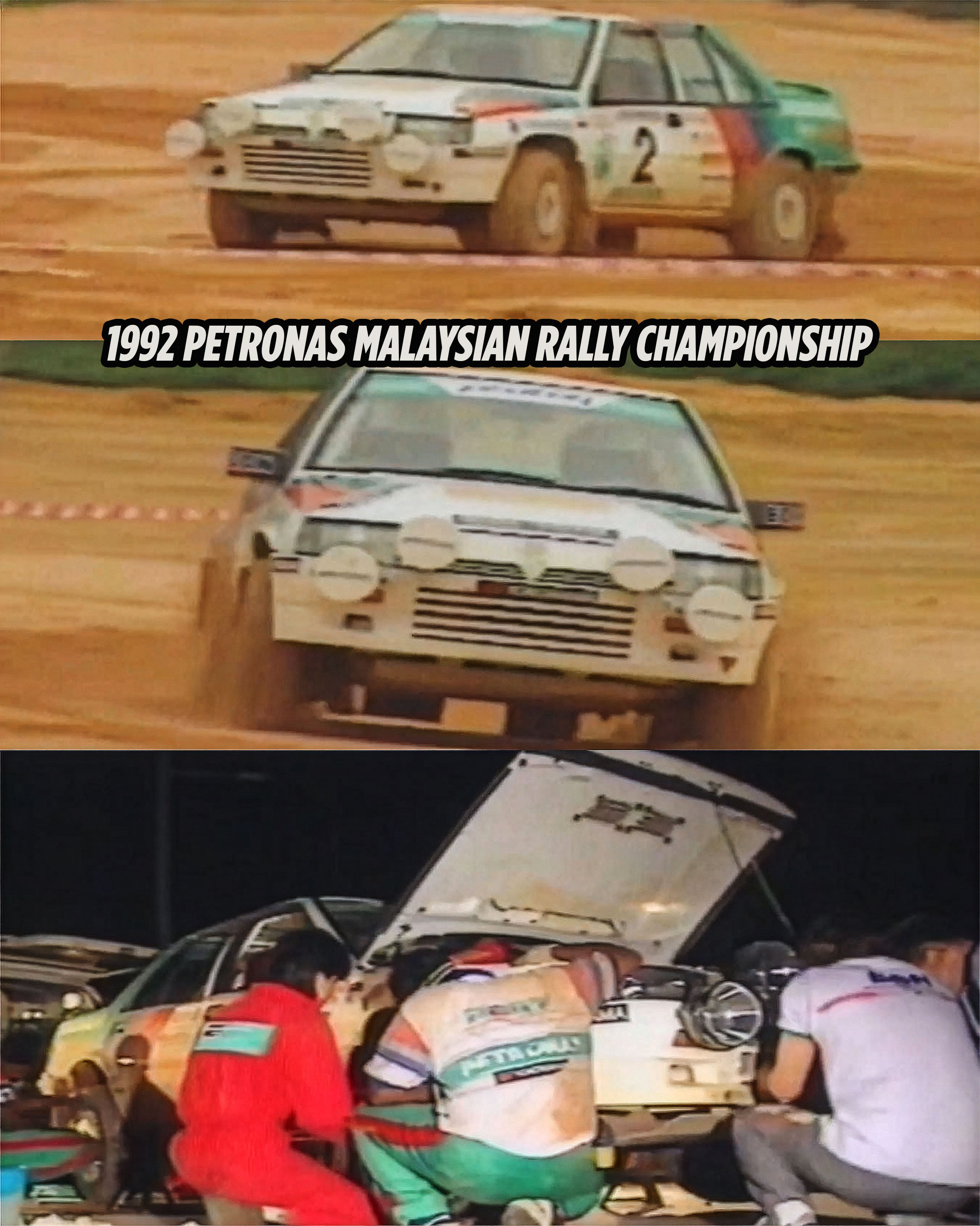
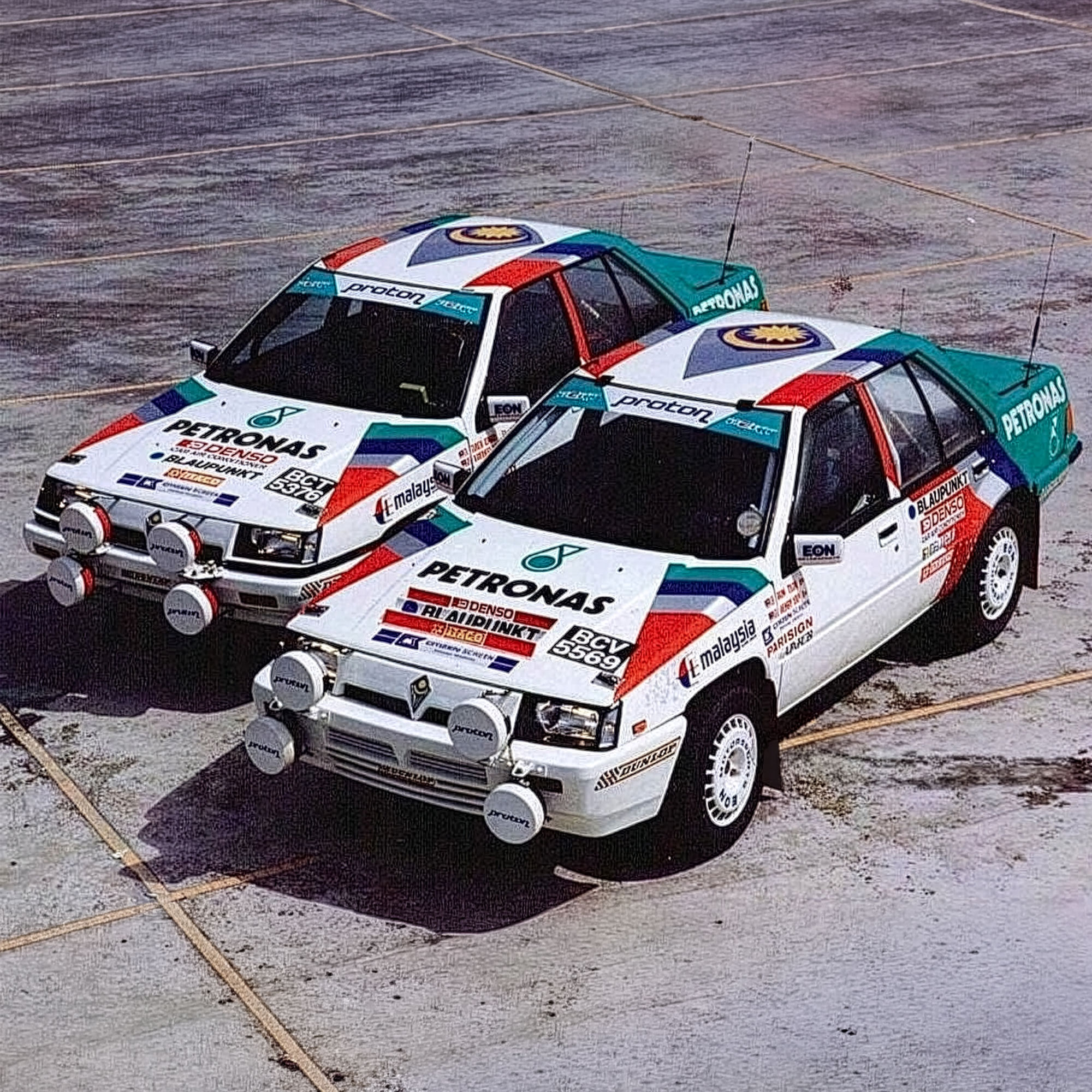
Malaysia’s motorsport legacy took a massive leap forward with the formation of the Petronas EON Racing Team (PERT), specifically created to spearhead an international rally campaign. The very first Proton Saga 4WD Turbo made its debut in 1990.
Developed by Tusk Engineering in close technical collaboration with Ralliart Japan, this machine was a radical departure from the street-legal sedan. It featured a sophisticated 4WD drivetrain and a turbocharged engine designed to withstand the harshest environments. Piloted by legends like the late Henry Yap and Ron Teoh, it transformed the “People’s Car” into a regional rally beast that dominated the dirt.
The Shared Legacy
From the glamorous circuits of the Jackie Chan Cup to the grueling gravel stages of the world rally scene with PERT, these two machines demonstrated the incredible versatility of their shared architecture.
Whether it was the precision required for the track or the ruggedness needed for the forest, the engineering DNA behind these icons was built for one thing: Championships.